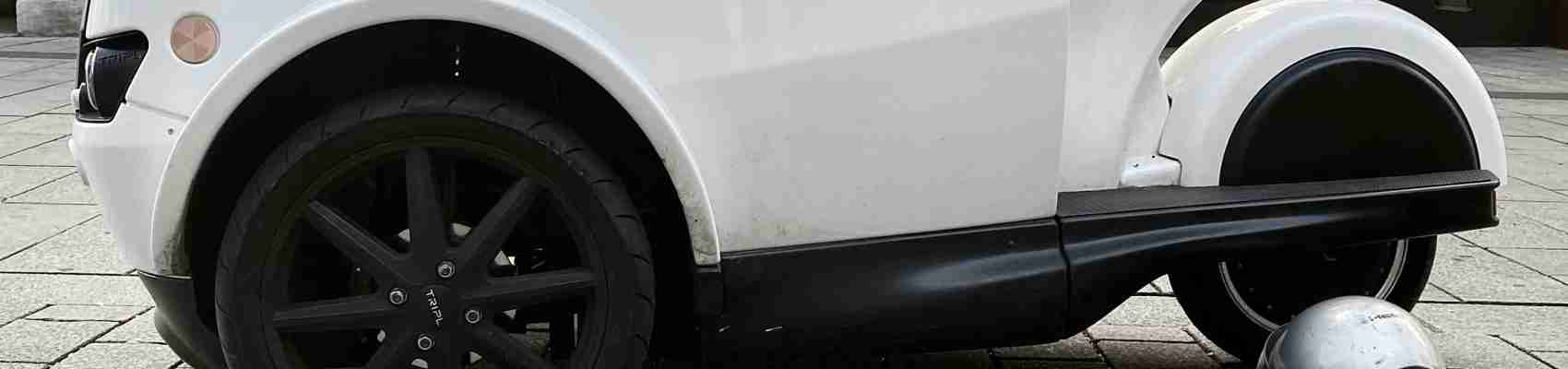
Introduction: The Surprise Revolution Rolling Down Your Street
What if the biggest disruption in urban transport isn’t another four-wheeled EV, but a three-wheeled one? Electric tricycles are quietly exploding in popularity, outselling electric cars in several Asian and European cities during 2023. They promise zero tailpipe emissions, rock-bottom
running costs, and stability that bikes can’t match. In this article you’ll discover how e-trikes work, the hard numbers behind their rise, the benefits for commuters of every age, and answers to the questions people Google most.1. Market Momentum: Numbers That Should Make Car Makers Nervous
The global electric tricycle market was valued at 6.2 billion USD in 2022 and is projected to hit 15 billion by 2028, according to Grand View Research, riding a compound annual growth rate (CAGR) of 16.9 percent. For perspective, the overall passenger car market crawls along at roughly 3 percent CAGR. In Germany alone, e-trike registrations jumped 44 percent year on year, while Chinese cities logged over 9 million units sold in 2023—more than double the country’s new EV car registrations.
| Metric | Electric Tricycles | Compact Cars |
|---|---|---|
| Average purchase price | $1,800–$4,500 | $18,000–$28,000 |
| Cost per 100 km (energy) | $0.25 | $4.60 |
| Parking footprint | 1.5 m² | 12 m² |
| Annual CO₂ emitted* | 0 kg | 2,000 kg |
*Assumes renewable electricity for charging.
2. Tech That Makes Three Wheels Feel Like Magic
Modern e-trikes pack the same lithium-ion cells found in top-tier e-bikes, but they add automotive-grade features:
- Hub motors delivering 500–1,000 W, enough to cruise at 25–45 km/h without pedaling.
- Torque sensors for buttery-smooth pedal assist, adjusting power 1,000 times a second.
- Regenerative braking that recovers up to 12 percent of lost energy on downhill runs.
- Swappable battery packs: a 720 Wh module weighs just 3 kg and recharges in under four hours.
- Integrated IoT trackers, theft alerts, and smartphone unlocking—no more rattling keys.
The result? A ride so intuitive your learning curve is five minutes, even if you haven’t touched a bike since childhood.
3. Why Commuters of All Ages Are Jumping On Board
Electric tricycles solve pain points that both cars and bicycles leave untouched.
- Stability for every rider. Three contact points mean no balancing act, perfect for seniors or parents hauling children.
- Cargo capacity. Rear baskets carry 80 kg—think weekly groceries without sweat.
- No license headaches. In 42 of 50 U.S. states, e-trikes under 750 W require no driver’s license or registration.
- Health perks. A University of Tennessee study showed e-trike commuters burned 30 percent more calories per trip than car users while reporting 40 percent lower perceived effort compared to cyclists on conventional bikes.
- Cost savings. Average annual operating cost including maintenance: $120. Compare that with AAA’s 2023 figure of $10,728 for a gasoline sedan.
4. Environmental Impact: The Small Vehicle With a Big Climate Punch
Switching one fossil-fuel car to an electric tricycle for trips under 8 km—roughly 52 percent of all urban journeys—cuts 1.3 metric tons of CO₂ annually. Multiply that by just 10 percent of a mid-size city’s drivers and you offset emissions equivalent to planting 2 million trees. Noise pollution drops too: trikes register about 55 dB at cruising speed, versus 70 dB for cars, creating quieter neighborhoods and less stress for residents.
5. People Also Asked: Rapid-Fire Answers
Are electric tricycles safe on busy roads? Yes. Wider visibility and built-in LED lighting improve conspicuity; many models include hydraulic disc brakes that stop from 25 km/h in under 3 meters.
How far can they really go? Typical range is 40–80 km per charge. Add a second battery and riders report 120 km without range anxiety.
Can they climb hills? A 750 W motor with 80 Nm torque handles 15-degree inclines easily. Hill-start assist prevents rollback.
What about winter? Fat-tire designs with puncture-resistant rubber maintain grip on snow; batteries perform best when stored indoors and clicked into place before departure.
6. Choosing Your Perfect E-Trike: A Quick Checklist
- Motor class. 250 W is fine for flat cities; 500-750 W suits mixed terrain.
- Battery capacity. Look for at least 600 Wh if your commute exceeds 25 km round trip.
- Cargo needs. Rear-loading platforms vary from 45 to 120 liters.
- Foldability. Urban dwellers in apartments may prefer compact folding frames.
- Warranty and service network. Aim for two years on electronics and access to local technicians.
7. Real-World Story: The Accountant Who Cut Her Commute Cost 95 Percent
Sophia Martinez in Austin swapped her compact SUV for a mid-drive electric tricycle last June. Her 14-km round trip used to cost $5 daily in fuel and parking. Now she spends less than $0.20 on electricity, arrives in the same time thanks to bike-lane shortcuts, and parks in her cubicle corner. Over 10 months she clocked 2,800 km, lost 6 kg, and says the stress relief from avoiding traffic is priceless.
8. What the Future Holds: Policy, Infrastructure, and Beyond
Cities are catching up fast. Paris expanded its protected cycleways to 1,000 km in 2024, with 20 percent width extensions to accommodate cargo and trikes. California’s Clean Mobility Voucher Project now grants up to $1,000 toward e-trike purchases for low-income residents. Analysts expect dedicated micro-mobility lanes, curbside charging lockers, and insurance products tailored to e-trikes within three years.
Conclusion: Time to Join the Three-Wheel Revolution
Electric tricycles marry the agility of bicycles with the comfort and carrying power of small cars, all while slashing costs and emissions. The market is booming, the tech is mature, and the benefits are hard to ignore. Why stay stuck in traffic or sweat on a conventional bike when a stable, battery-boosted alternative is ready to roll? Test-ride an e-trike this week, share your experience in the comments, and be part of shaping a cleaner, quieter, more joyful way to move.